The Have The Most Negative Electron Affinities. This is so because the second electron has to be forced to enter the mono negative ion. A) alkaline earth metals b) alkali metals c) halogens d) transition metals e) chalcogens
7.5 Electron Affinities Chemistry LibreTexts from chem.libretexts.org
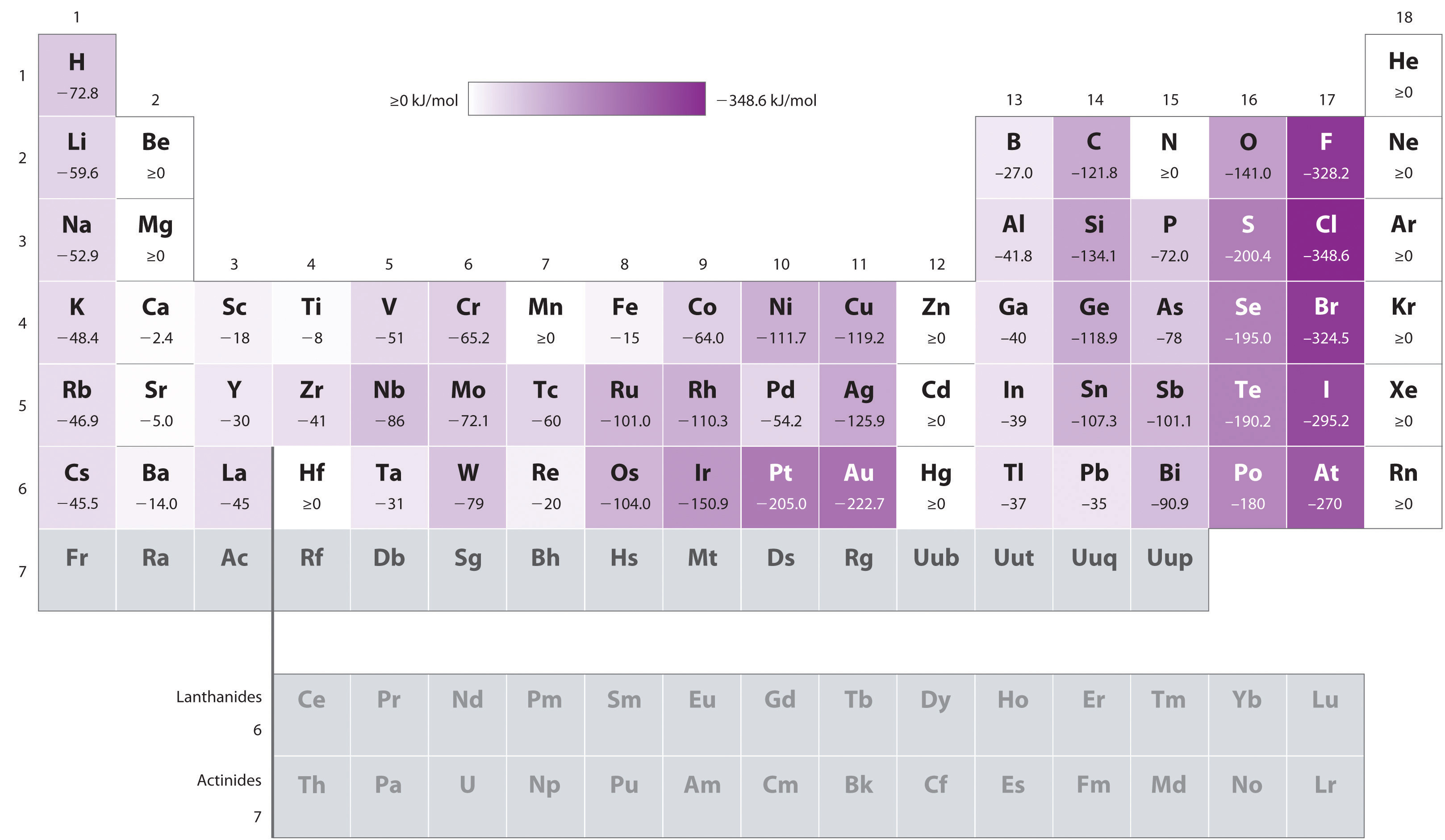
Consequently, the elements of the third row (n = 3) have the most negative electron affinities. Fluorine, therefore, has a lower affinity for an added electron than does chlorine. Gens have the most negative electron affinities of the elements.
Chlorine Has The Most Negative Electron Affinity.
Periodic table, and __________ as you go from the bottom to the top of a group in the table. The first electron affinity is always exothermic that is negative the second electron affinity of the same element will be positive or endothermic. Explore answers and other related questions.
Electron Affinity Is The Amount Of Energy Change (Δe) That Occurs When An Electron Is.
According to wikipedia [electron affinity] , in chemistry and atomic physics, the electron affinity of an atom or molecule is defined as the amount of energy released when an electron is added to a. Since argon is more suited towards loosing an electron, and as we know electron has negative charge, so argon will give away the negative charge and will show positive electron affinity. A) alkaline earth metals 2.
The Noble Gases (Group 8A) Exist As Monatomic Gases.
The halogens have the most negative electron affinities indicating that they are most comfortable accepting an electron. Periodic trends in electron affinity the electron affinities of the noble gases have not been conclusively measured, so they may or may not have slightly negative values. The element which has a tendency to gain an electron so easily will have most negative electron affinity.
Chlorine Has The Most Negative Electron Affinity.
The formation of an anion essentially gives the halogen atom the electron configuration of the nearest noble gas. This is more easily seen in symbol terms. The electron affinities of the radicals oh and sh are the most precisely known of.
👍 Correct Answer To The Question The Have The Most Negative Electron Affinities.
The reason that chlorine (cl) is the element with the highest electron affinity (the most negative value) is very similar to the reason that fluorine is the most electronegative element. Fluorine, therefore, has a lower affinity for an added electron than does chlorine. Which group of elements have electron affinities with the largest negative values?