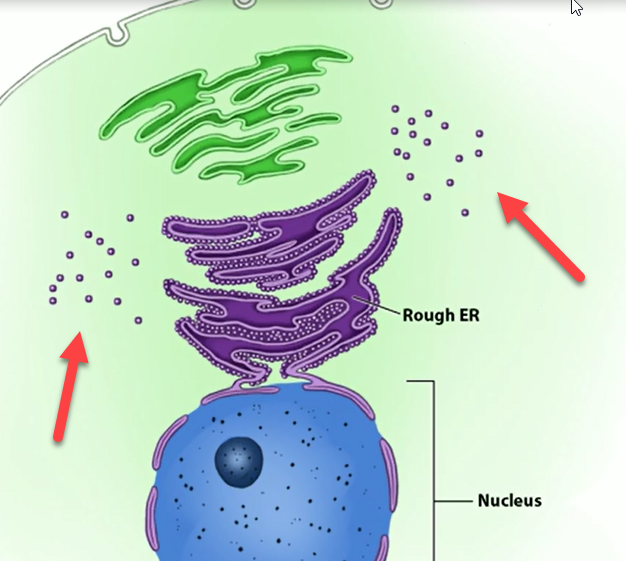
Function Of Free Ribosomes. What is the function of ribosomes in protein synthesis quizlet? These include proteins used in the cytosol and the supportive structure known as the cytoskeleton, as well as those used by the mitochondria, which produces the cell’s energy, and, in plant cells, chloroplasts.
Free Ribosomes Under Microscope Micropedia from microspedia.blogspot.com
Ribosomes consist of several molecules of a unique rna molecule called ribosomal rna, or rrna, shackled together over a complex of many dozen proteins. From this brief account of ribosome function it follows that the ribosome catalyzes two chemical reaction steps involving covalent bonds: In an electron micrograph as shown above, ribosomes appear as dark granules.
Ribosomes Are Important Because They Are Responsible For Protein Synthesis.
Our muscle cells have rich amounts of the smooth endoplasmic reticulum. This reticulum is free from ribosomes. Free ribosomes, in particular, are important because they produce proteins essential for internal cellular activity, which are not synthesized elsewhere.
Free Ribosomes Synthesize Proteins In The Cytoplasm.
However, they can also “settle” on the endoplasmic reticulum (er) to form “rough endoplasmic reticulum (rer).” ribosomes in close association with the endoplasmic reticulum can facilitate the further processing of newly made proteins. It assembles amino acid to form proteins that are essential to carry out cellular functions. They are located as free particles throughout the cell in both prokaryotic, like bacteria, and eukaryotic, like us, cells.
In An Electron Micrograph As Shown Above, Ribosomes Appear As Dark Granules.
And this structure acts as a docking station for the transfer rna that contains the amino acid that will then become part of the growing polypeptide chain, which eventually becomes the protein. What is the function of ribosomes in protein synthesis quizlet? Free ribosomes produce proteins that stay and are used within the cell various types of proteins are produced by free ribosomes proteins that function in metabolism:
They Provide Structure For The Body, Take In Nutrients From Food, Convert Those Nutrients Into Energy, And Carry Out Specialized Functions.
Free ribosomes are involved in the synthesis of proteins that will function in the cytosol while bound ribosomes in the synthesis of proteins that are to be exported or used within the cell membrane. Most of the proteins synthesized by free proteins are for the use within the cell. Learn more on ribosomes and their types visit vedantu.com.
What Is The Definition And Function Of Ribosomes?
These include proteins used in the cytosol and the supportive structure known as the cytoskeleton, as well as those used by the mitochondria, which produces the cell’s energy, and, in plant cells, chloroplasts. When it is present in muscles, it is known as the sarcoplasmic reticulum. Ribosomes make proteins out of amino acids and are made up of ribonucleic acid and proteins.