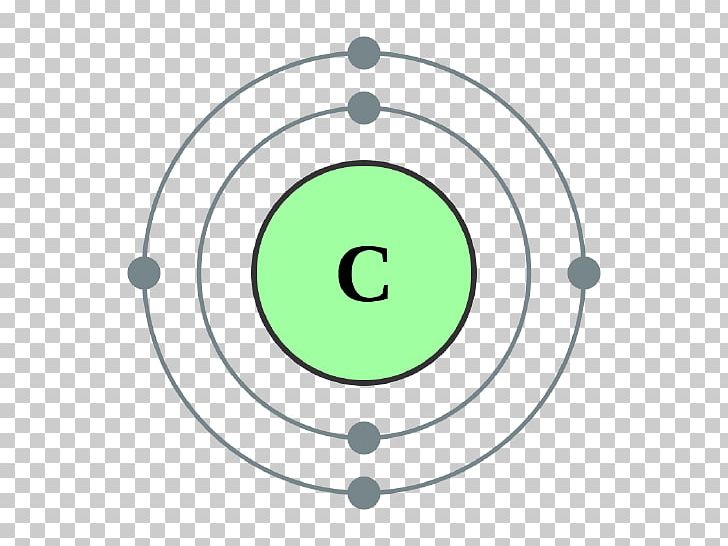
Valence Electrons Of Carbon. The number next to the a is the number of valence electrons in an atom of an element in that group. Besides this, we know chemistry is full of exceptions, so is the case with the fluorine atom.
Electron Shell Electron Configuration Valence Electron from imgbin.com
Carbon has 4 valence electrons in the outermost shell. This makes the valence electrons in carbon 4. This basically means that carbon has four valence electrons (outer electrons that are available for forming bonds with other atoms).
Noble Gas Elements (\ ( {\Text {He}}, {\Text {Ne}}, {\Text {Ar}}, {\Text {Kr}},\) And \ ( {\Text {Rn}}\)) Are Chemically Inert Since Their Valence Shells Are Completely Filled.
Ground state electronic configuration of carbon is 1s 2, 2s 2, 2p 2. In the cbr4 lewis structure, a total of 12 unshared and 4 shared pairs. The total number of electrons present in the valence shell of an atom are called valence electrons, and there are a total of four electrons present in the valence shell of carbon (2s 2 2p 2).
The Valency Of A Carbon Atom Is 2, 4 And The Valence Electrons Of A Carbon Atom Are Four.
Besides this, we know chemistry is full of exceptions, so is the case with the fluorine atom. 9 rows carbon has \(4\) electrons present in its valence shell. Two are in the completed inner orbit, while four electrons are found in the atom’s outermost orbit.
Look At The Writing Above Each Group, Or Column.
Carbon is in group 4a, so it has 4 valence electrons. Each hydrogen atom has one valence electron and is univalent. Oxygen is in group 6 and has 6 valence electrons.
It Has 4 Valence Electrons, So The Probability Of Formation Of Four Bonds Is Maximum.
132 views view upvotes shubhrata yadav answered 4 years ago originally answered: Carbon atoms have 4 valence electrons each. You can determine the number of valence electrons in any atom of an element belonging to the representative elements (main group) by determining its electron configuration.
Electron Dot Diagram Of Carbon Atom
In methane, carbon has a valence of 4; But this does not happen because it would require a large amount of energy to remove four electrons and form a \(. And in hydrogen chloride, chlorine has a valence of 1.chlorine, as it has a valence of one, can be substituted for.